Cute School Supplies Apple Pencil Review
As an experienced embroidery designer who has spent years refining designs for small business merchandise, I approach every new digital file with a critical eye. The goal is not just to create something pretty, but to ensure it translates perfectly into a finished product that builds brand value. Today, I am reviewing the Cute School Supplies Apple Pencil design. At first glance, this piece promises to brighten back-to-school creations, but does it hold up under the scrutiny of commercial production? Let's dive into how this design performs when applied to real-world business assets.
First Impressions and Visual Personality
The title and description suggest a playful, friendly aesthetic. When you see a design labeled as "Cute School Supplies," you expect a balance between professional polish and whimsical charm. For a small business owner looking to create branded merchandise, this distinction is vital. A design that feels too childish can undermine a premium brand, while one that is too rigid might fail to engage a younger audience or creative community.
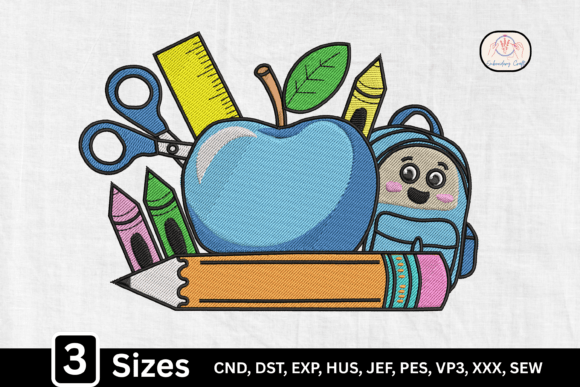
This design appears to lean heavily into the handmade presentation style. It likely features clean lines and bold shapes suitable for various applications, from tote bags to aprons. The imagery of an apple pencil is universally recognized, making it an excellent choice for businesses in the education sector, craft studios, bakeries with a school theme, or any boutique wanting to evoke a sense of nostalgia and fun. The visual personality suggests it will work well as a chest logo accent or a sleeve detail where a touch of personality is needed without overwhelming the garment.
Real-World Business Applications
In my experience, the true test of an embroidery design lies in its versatility across different products. How does the Cute School Supplies Apple Pencil perform when moved from the screen to the hoop?
- Embroidered Patches: This design has strong potential as a standalone patch. Small business owners often use patches to add character to denim jackets, beanies, or backpacks. If the stitch density is managed correctly, it creates a durable badge that customers can proudly wear.
- Staff Uniforms and Aprons: Imagine a local café or a bakery using this on their staff aprons. It adds a welcoming, approachable vibe that fits the hospitality industry perfectly. It transforms a standard work shirt into a branded uniform that feels personal and curated.
- Tote Bag Design: Tote bags are a staple of small business merch. This design works beautifully on canvas totes, serving as a subtle nod to creativity and learning. It is ideal for event merch or as a promotional giveaway that encourages repeat engagement.
- Cap Embroidery: For a forward-facing cap design, the compact nature of a pencil graphic allows it to sit neatly on the front panel. It offers a modern twist on classic headwear, appealing to a younger demographic or creative professionals.
- Product Packaging Accents: Beyond apparel, consider adding this to custom tags or hang tags attached to handmade products. It elevates the unboxing experience, signaling attention to detail and care.
Strategic Brand Identity and Customer Trust
Every stitch contributes to your brand identity. Using a cohesive set of design assets like the Cute School Supplies Apple Pencil helps establish visual consistency. When customers see a consistent, high-quality embroidered mark on your products, it reinforces trust and recognition. It tells them that you invest in quality, which directly impacts perceived product value.
A playful design like this can also boost buyer engagement. In a crowded marketplace, a cute, recognizable icon helps your brand stand out. It humanizes the business, making it feel less corporate and more like a neighborly shop. However, it is crucial to ensure the design aligns with your overall tone. If you sell luxury goods, a playful pencil might clash; if you sell craft supplies or educational tools, it is a perfect fit.
Where to Exercise Caution
Even the best machine embroidery design requires careful placement and execution. There are specific scenarios where the Cute School Supplies Apple Pencil might struggle if not handled correctly.
- Small Patch Sizes: If you plan to make tiny patches, be wary of intricate details. Fine outlines may fill in or disappear when stitched at a very small scale. Always test the minimum viable size before mass production.
- Curved Surfaces: Embroidering on the front of a cap or a rounded container requires specialized hoops and stabilizers. Complex curves can distort the design, so verify that the digitization accounts for curvature.
- High Stitch Density: Designs with heavy satin stitches can feel stiff and look bulky on thin fabrics. If you are working with delicate materials, check the stitch count to ensure the fabric drapes naturally.
- Detailed Outlines and Tiny Lettering: If the design includes text, ensure the font is legible. Tiny lettering often becomes illegible after washing or when viewed from a distance.
- Dark Uniforms and Fabric Texture: Dark fabrics require a higher thread count or a background underlay to prevent the base material from showing through. Textured fabrics like fleece or heavy wool may hide the definition of the design.
Practical Designer Notes for Production
Before committing to a full run of commercial embroidery, follow these essential steps to ensure the finished product meets your standards.
Test in Black and White First: Convert the design to grayscale to check the contrast and flow of the stitches. This helps identify areas that might look muddy or too light when stitched.
Review Thread Color Contrast: Ensure the chosen thread colors pop against your intended fabric. A low-contrast combination can make the design look dull and unprofessional.
Inspect Spacing and Hoop Size: Verify that the design fits within your standard hoop size. If the design is larger than your machine's capabilities, you may need to split it or adjust the scale, which could compromise the integrity of the image.
Use Proper Stabilizer: The stability of the fabric is paramount. Use the correct type of stabilizer (cut-away, tear-away, or sticky) based on the weight and stretch of your material. This prevents puckering and ensures the design sits flat.
Create a Printable Mockup: Before stitching a single sample, generate a printable mockup to show clients. This allows for approval on placement and color scheme without wasting thread or time.
Compare Beside Other Assets: Place this design next to your other embroidery files to ensure they share a similar stitch style and aesthetic. Consistency across your catalog is key to a professional look.
Confirm Commercial Licensing: Finally, always double-check the licensing terms. Ensure you have the right to use the digital embroidery file for commercial purposes, including selling items with the design on them. Do not assume that a purchase includes unlimited commercial rights unless explicitly stated.
Final Thoughts
The Cute School Supplies Apple Pencil offers a charming option for brands looking to inject a bit of playfulness into their custom apparel and accessories. Whether used for a staff uniform, a boutique gift, or a branded patch, it has the potential to become a beloved symbol of your business. By following proper testing protocols and understanding the limitations of the medium, you can turn this digital asset into a tangible asset that drives customer loyalty and enhances your brand's reputation.