Just One More Chapter: A Designer's Review
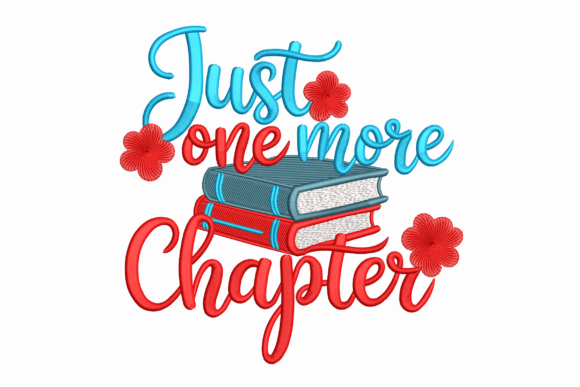
As an experienced embroidery designer who has spent years refining digital files for commercial use, I approach every new asset with a critical eye. Today, I am reviewing Just One More Chapter, a design specifically marketed for book lovers and small business merchandise. When evaluating a piece like this, we are not just looking at aesthetics; we are analyzing its viability as a revenue-generating brand element. The description highlights a dynamic layout where "Just" and "one more" utilize a whimsical script font, suggesting a playful yet sophisticated tone that could resonate deeply with specific customer bases.
The First Impression of Just One More Chapter
Upon first glance, the visual personality of Just One More Chapter strikes me as inviting and narrative-driven. The use of a whimsical script for key phrases immediately signals a handmade, boutique feel rather than a rigid corporate identity. This is crucial for small business owners who want their products to feel personal and curated. In the world of embroidery file selection, finding a balance between legibility and artistic flair is always a challenge, but this design appears to lean heavily into the charm of the craft itself.
The dynamic arrangement suggests movement, which translates well when stitched onto curved surfaces or flat apparel. It feels premium without being overly ornate, making it suitable for a wide range of industries from bakeries to creative studios. However, the reliance on script fonts requires careful consideration regarding stitch density and thread choice to ensure the text does not blur or lose definition during production.
Real-World Application for Small Business Merch
Imagine a local café or a boutique bookstore looking to expand their product line. Just One More Chapter offers a perfect opportunity to create cohesive branded items that tell a story. For a coffee shop, stitching this phrase on high-quality aprons can transform staff uniforms into conversation starters, reinforcing the idea of "staying a while" over a good cup of coffee and a book. Similarly, for a florist or pet brand, this design adds a layer of personality that elevates standard work shirts into memorable marketing tools.
In the realm of embroidered patch creation, this design shines. Patches featuring this phrase can be applied to tote bags, denim jackets, or even the back of caps, serving as collectible items for loyal customers. For Etsy sellers and digital embroidery file buyers, this asset is ideal for creating limited-run collections. Whether used as a chest logo accent on a hoodie or a subtle detail on a sleeve, the design allows for versatility that drives engagement. It works exceptionally well as a customer gift, turning a simple purchase into a keepsake that encourages repeat business.
The potential extends to event merchandise as well. For Back To School events or literary festivals, this design serves as a unifying element for attendees. It creates a sense of community and shared interest, which is vital for building a strong brand identity. When executed correctly, the finished product becomes a tangible representation of the brand's values, fostering trust and recognition among your clientele.
Strategic Placement and Versatility
- Cap Embroidery: The dynamic layout fits well on the front panel of structured hats, offering a modern look that stands out against the curve.
- Tote Bag Design: A staple for any handmade brand, placing this design centrally or on a pocket adds immediate value to the bag.
- Apron Embroidery: Perfect for kitchen staff or artisans, ensuring the design remains visible and legible during work.
- Product Packaging Accents: Small patches or embroidered labels attached to packaging can elevate the unboxing experience significantly.
Potential Pitfalls and Areas for Caution
While Just One More Chapter has great potential, an experienced designer must warn against using it in scenarios where detail might be lost. Small patch sizes present a significant risk; if the dimensions are too compact, the whimsical script may become illegible, turning a charming design into a blurry mess. Similarly, attempting to embroider this on tiny lettering areas or highly textured fabrics like heavy wool or loose-weave canvas can compromise the integrity of the stitches.
Curved surfaces, such as the front of a cap, require precise digitizing to account for distortion. If the design is not adjusted for the curvature, the spacing between letters may appear uneven, detracting from the professional finish. High stitch density is another concern; if the design includes detailed outlines or fills that are too tight, it can cause fabric puckering, especially on lighter materials. Furthermore, dark uniforms often demand underlay techniques and specific thread colors to ensure the white or light-colored script pops effectively. Frequent washing can also lead to fraying if the stabilizer is not chosen correctly or if the stitch count is insufficient to hold the threads in place.
Impact on Brand Identity and Customer Trust
The decision to use Just One More Chapter goes beyond mere decoration; it is a statement about your brand's voice. A well-executed embroidery project communicates professionalism and attention to detail. When customers see a clean, high-quality stitch job on a tote bag or uniform, they perceive the business as trustworthy and invested in quality. Conversely, a poorly executed design can undermine the perceived value of the entire product line.
This design fosters a connection with buyers who appreciate the "handmade" aesthetic. It suggests that the business cares about the tactile experience of its products. By maintaining visual consistency across all assets—whether it is a digital embroidery file used for a shirt or a printed mockup for social media—you reinforce brand recognition. This consistency builds a loyal following, as customers come to associate the specific style of Just One More Chapter with the reliability and warmth of your brand.
Essential Designer Notes for Production
Before committing to a large production run, there are several technical steps every business owner and decorator should take. First, test the design in black and white to ensure the contrast holds up without relying on color alone. Check if the design retains its readability when scaled down to a small patch size, as this is a common point of failure. Review thread color contrast carefully; a script font often loses definition if the thread color is too similar to the fabric background.
Inspect the spacing meticulously to ensure no letters are touching or overlapping, which can happen during machine execution. Confirm the appropriate hoop size for your intended garment to avoid unnecessary shifting. Always test on real fabric rather than paper or synthetic substitutes, as different textures react differently to needle penetration. Using the proper stabilizer is non-negotiable for preventing distortion, particularly on stretchy materials like jersey or knit caps.
Create a printable mockup for client approval before finalizing the order. This allows stakeholders to visualize the final result and catch any issues early. Compare the design beside other design assets in your library to ensure it fits within your existing visual language. Finally, confirm commercial licensing terms explicitly. Ensure you have the legal right to use Just One More Chapter for mass-produced merchandise, branded patches, and commercial embroidery projects. Do not assume the license covers all uses without verification.
In conclusion, Just One More Chapter is a compelling asset for small business merch and custom apparel, provided it is treated with the technical precision required for high-quality embroidery. Its whimsical nature makes it perfect for brands wanting to convey creativity and warmth, but success depends entirely on the execution details discussed above.